
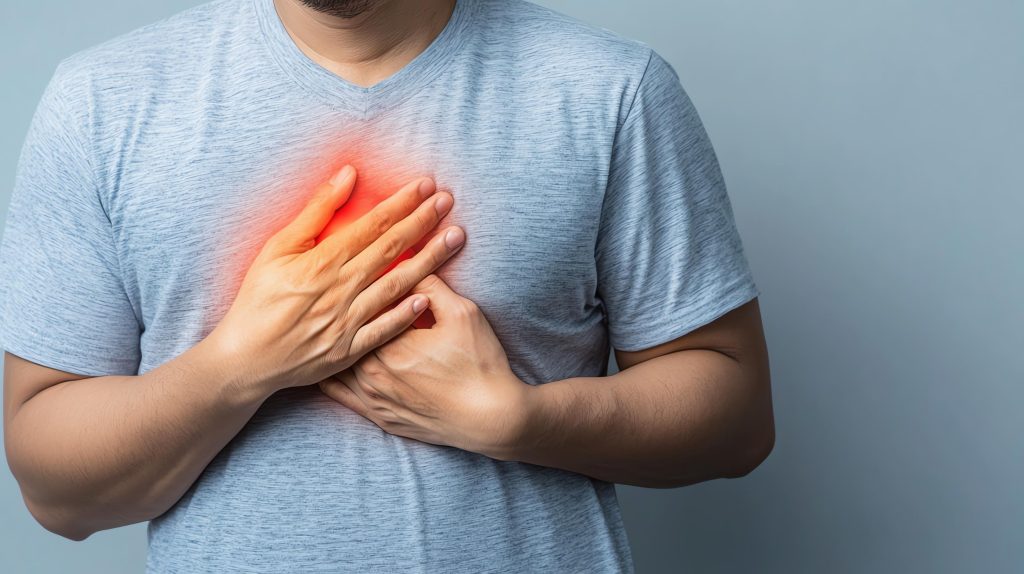
Understanding Acid Reflux (GERD)
Acid reflux, or gastroesophageal reflux disease (GERD), happens when stomach acid flows backward into the esophagus. This backwash irritates the lining of your throat and chest, often leaving a burning sensation or sour taste.
🔸 What Causes Acid Reflux?
Acid reflux doesn’t have a single cause—several factors may contribute:
- Weakened esophageal valve: The lower esophageal sphincter (LES) should close tightly after meals, but if it relaxes too often, acid can escape.
- Overeating: Large meals increase pressure in the stomach and push acid upward.
- Trigger foods & drinks: Spicy, acidic, fatty, or caffeinated items can trigger or worsen symptoms.
- Smoking: Weakens the LES and damages the lining of the esophagus.
- Pregnancy: Hormonal shifts and physical pressure can increase reflux.
- Medications: Some medications (like antihistamines, calcium channel blockers, and sedatives) can interfere with LES function.
🔸 Recognizing the Symptoms
Acid reflux can present in several ways—some obvious, some more subtle:
- Heartburn – A burning sensation in the chest, especially after meals or when lying down
- Regurgitation – The feeling of food or acid backing up into your throat
- Sour taste in the mouth
- Hoarseness or a raspy voice
- Chronic cough or throat clearing
- Bad breath
- Trouble swallowing (called dysphagia)
🔸 How It’s Treated
Treatment depends on how frequent and severe your symptoms are:
1. Lifestyle Adjustments
- Eat smaller, more frequent meals
- Avoid late-night eating
- Identify and reduce trigger foods
- Elevate your head while sleeping
- Lose weight if overweight
- Quit smoking
2. Medication
- Antacids: Provide quick relief by neutralizing stomach acid
- H2 blockers / PPIs: Reduce acid production at the source
- Prescriptions: Stronger meds may be needed for persistent symptoms
3. In Rare Cases: Surgery
If medications don’t help, surgical procedures can reinforce or rebuild the valve between the stomach and esophagus.
⚠️ If Left Untreated
Chronic acid reflux can lead to serious health issues, including:
- Esophagitis: Inflammation or ulceration of the esophagus lining
- Barrett’s Esophagus: A condition where the lining changes, increasing cancer risk
- Esophageal Cancer: Rare, but possible in long-term untreated cases
✅ When to Talk to a Provider
If you’re experiencing symptoms more than twice a week, or notice difficulty swallowing, persistent cough, or chest pain—it’s time to check in. iVisitDoc providers are here to evaluate your symptoms and recommend the right care for you.